
Use Cases · Strategic data and critical services

For data that must remain protected. For services that must keep running.

From strategic state information to financial services and vital infrastructure, every sector has different requirements for protecting the confidentiality, integrity, and availability of data.

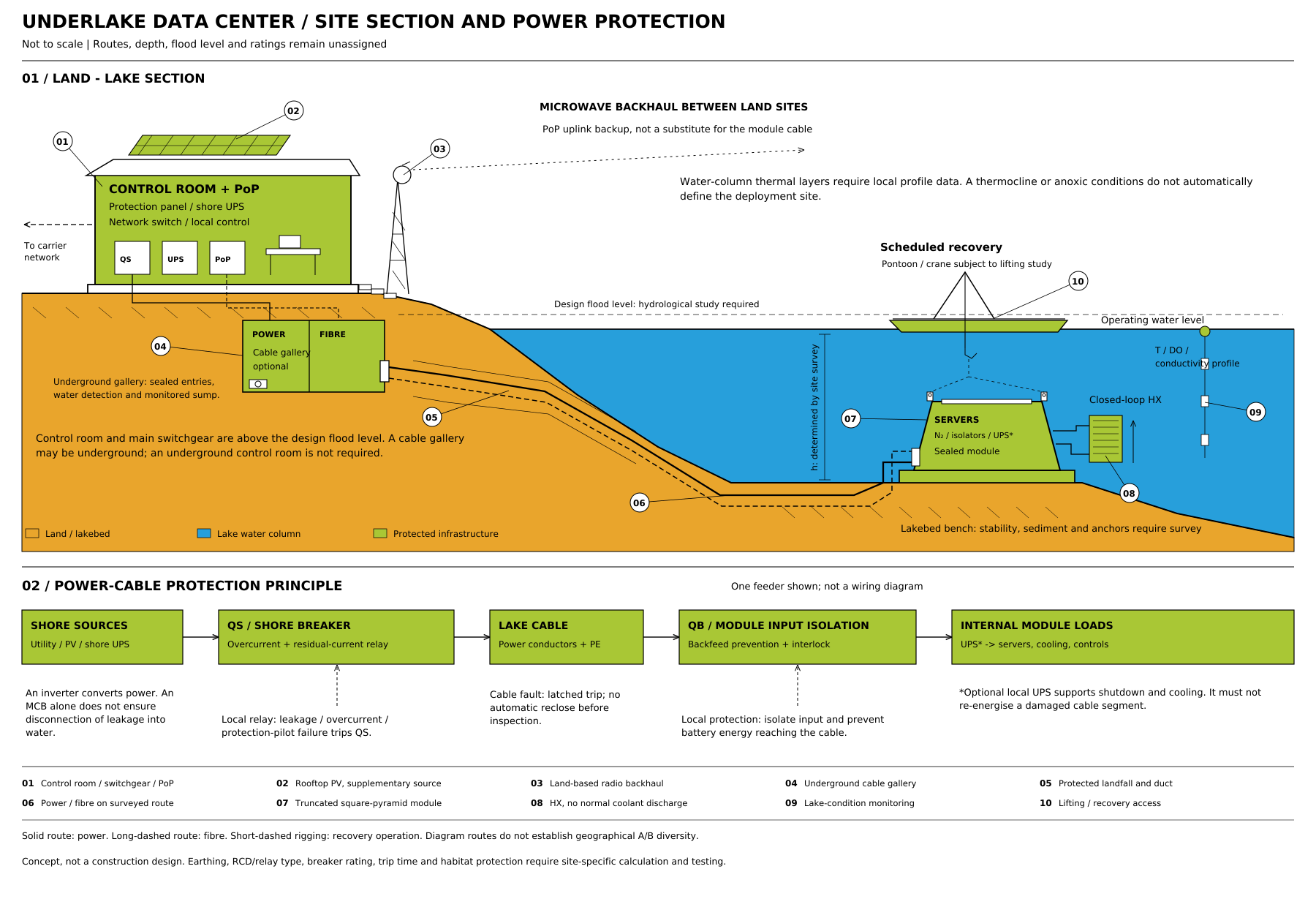
Jalaranu is developing an underlake datacenter concept to explore approaches to physical protection, infrastructure placement, and service continuity for these needs.

Find the use case that fits your requirements and discuss what we need to validate together.

The value of information shapes its protection requirements.

Classified information requires controls over access and disclosure. Critical data requires integrity and availability to support essential functions. A dataset can have both characteristics.

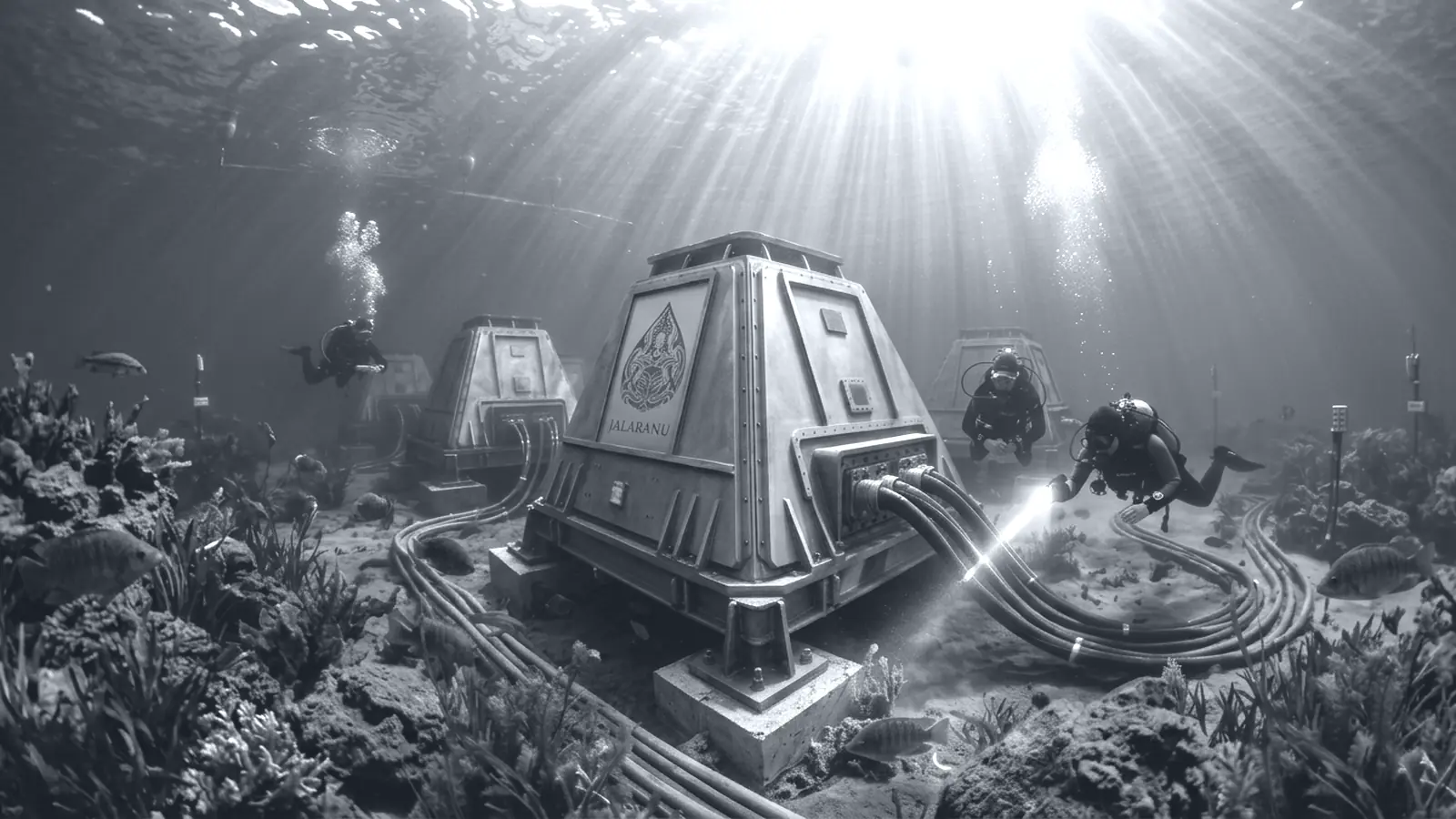
Concept illustration of the Jalaranu datacenter beneath a lake, connected to shore-based support facilities.
Concept illustration. Final configuration is subject to study and engineering findings.
The value of information shapes its protection requirements.
RequirementProtection focusPotential applications
Classified information and state secretsConfidentiality, restricted access, management control, and handling under appropriate authority.Defence documents, intelligence information, diplomatic archives, and strategic documents formally designated as classified.
Critical data and servicesIntegrity, availability, and the ability to recover when disruption occurs.Transaction data, public-service applications, and information systems supporting energy and transport.
Strategic information assetsProtection against loss, unauthorised modification, and unauthorised access.Exploration data, industrial designs, research findings, intellectual property, and essential state archives.
01

Classified Information & State Secrets

  • Defence
  • Intelligence
  • Government

Storage and processing environments for information whose disclosure or modification could affect strategic state interests.

Potential applications

  • Defence documents, intelligence information, and diplomatic archives under appropriate classification and authority.
  • Strategic policy documents formally designated as classified.
  • Segregated processing environments, access controls, and audit trails.
  • Recovery copies of sensitive information with institution-defined access and key management.

Objective

Preserve confidentiality, integrity, and institutional control over information.

To validate

Classification requirements, personnel authorisation, key management, system segregation, and physical and digital security.

02

Disaster & Cyber Recovery

  • Finance
  • Government
  • Healthcare
  • Telecoms
  • Energy
  • Transport
  • Defence

Recovery capacity for data and applications when primary services are disrupted by physical incidents, facility failures, or cyber incidents.

Potential applications

  • Additional copies of transaction data, administrative records, health records, and operational support data.
  • Recovery environments with access and dependencies separated from primary systems.
  • Restoration of public-service applications, hospital systems, and operator services.
  • Periodic data and application recovery testing, including data integrity checks.

Objective

Restore priority functions within acceptable recovery time and data-loss objectives.

To validate

Recovery objectives, differing risk exposures, power and network dependencies, backup isolation, and recovery test results. Replication alone does not ensure recovery from a cyber incident.

03

Base Support & Defence Readiness

  • Military & defence

Computing, storage, and supporting applications for permanent bases and Forward Operating Bases (FOBs), subject to deployment and connectivity requirements.

Potential applications

  • Digital services supporting FOBs and permanent bases.
  • Infrastructure for command information and coordination systems.
  • Logistics, inventory, maintenance, and asset-readiness management.
  • Simulation, training, research, and test environments.
  • Storage and recovery of base-support data.

Objective

Support information availability and continuity of services underpinning defence readiness.

To validate

Local service requirements, data classification, operational control, communications dependencies, and maintenance and recovery procedures.

04

Strategic Analytics & Geospatial Processing

  • Intelligence
  • Defence
  • Government
  • Energy
  • Maritime
  • Logistics

Processing environments that turn large datasets into information supporting analysis and decision-making.

Potential applications

  • Processing and storage of imagery, geospatial data, and intelligence, surveillance, and reconnaissance (ISR) data under appropriate authority.
  • Analysis of open sources and other lawfully obtained information.
  • Risk analysis covering the economy, energy, supply chains, and infrastructure.
  • Processing of maritime environmental information and logistics planning data.
  • Analytical workspaces with segregated access and audit trails.

Objective

Provide processing capacity and data governance for strategic analysis.

To validate

Data provenance and authority to use it, computing requirements, latency, integrity, and workspace segregation.

05

Research Computing, Modelling & Simulation

  • Energy
  • Finance
  • Healthcare
  • Defence
  • Universities
  • Research institutions

Computing capacity for analytical and scientific workloads requiring intensive data processing.

Potential applications

  • Seismic-data processing, reservoir modelling, and simulation of energy systems and industrial processes.
  • Risk modelling, stress testing, actuarial computing, and fraud analytics.
  • Processing of genomic data, medical images, and research datasets under appropriate authority.
  • Engineering simulation, defence research, and test environments.
  • Shared research infrastructure with universities and laboratories.

Objective

Support data processing and experimentation with capacity matched to workload requirements.

To validate

Workload profiles, computing hardware, power, heat rejection, data transfer, maintenance requirements, and whole-life facility costs.

06

Regional Computing & Digital Services

  • Telecoms
  • Digital infrastructure operators
  • Government
  • Regional service partners

Placement of computing and storage capacity to serve users and applications within a region.

Potential applications

  • Regional application hosting and storage.
  • Network-management applications, service monitoring, and operator analytics.
  • Content caching where demand patterns and connectivity support it.
  • Dedicated computing infrastructure for partner requirements.
  • Additional capacity and replicas for digital services.

Objective

Provide capacity in locations suited to demand and network architecture.

To validate

Actual connectivity, latency, network capacity, alternative routes, user requirements, and site economics.

07

Operational Support & Asset Management

  • Energy
  • Transport
  • Maritime
  • Logistics
  • Defence

Information infrastructure for planning, monitoring, and maintaining assets and operational support services.

Potential applications

  • Analysis of operational histories and predictive maintenance.
  • Information applications supporting ports, distribution, and supply chains.
  • Fleet, inventory, capacity, and asset-readiness management.
  • Storage of facility designs and technical documentation.
  • Replication and recovery of applications supporting operations.

Objective

Preserve access to information needed for asset management and continuity of activities.

To validate

System integration, data quality, connectivity, and separation from real-time or safety-control functions.

08

Strategic Archives & Intellectual Property Protection

  • Government
  • Energy
  • Finance
  • Healthcare
  • Industry
  • Research institutions

Managed storage for information that must remain intact, traceable, and accessible to authorised users throughout its retention period.

Potential applications

  • Essential state archives, land records, and administrative data.
  • Exploration, geological, and resource-reserve data, and industrial designs.
  • Audit archives and transaction evidence with integrity controls.
  • Research findings, medical data, and intellectual property under their respective governance requirements.
  • Integrity checks, retrieval testing, and migration of media or formats.

Objective

Preserve the long-term value of information and support traceability and reuse.

To validate

Retention policies, access rights, capacity, retrieval times, integrity, and technology migration plans.

Sector and use-case mapping

One requirement can appear across sectors. The mapping below connects example requirements to the related use cases.

Sector and use-case mapping
SectorExample requirementsRelated use cases
Defence & militaryClassified information, FOB and base support, asset readiness123457
Intelligence & national securitySensitive information and strategic analysis124
GovernmentState secrets, public services, state archives12468
Energy & natural resourcesExploration data, simulation, asset operations24578
Banking & financial servicesService recovery, risk computing, transaction evidence258
Telecomm & digital infrastructureRegional capacity and service continuity26
Transport, maritime & logisticsOperational information, geospatial data, asset management247
Healthcare & strategic researchSensitive data, system recovery, scientific computing258

Four needs that connect every sector.

Protecting sensitive information

Define who is authorised to access, manage, and process data. Protection requirements need to reflect information classification and institutional responsibilities.

Resilience to physical disruption

Evaluate how the location, placement, and design of a facility affect its risk exposure. Module protection needs to be considered together with power, connectivity, supporting facilities, and recovery.

Continuity and recovery

Establish which data and services must be preserved, how recovery will work, and how its success will be tested when a facility or region is disrupted.

Operational control

Clarify who operates the system, manages access and keys, oversees suppliers, and is accountable for the service.

Start with requirements. Proceed through evidence.

The suitability of underlake deployment needs to be assessed against organisational requirements, site conditions, and relevant alternatives.

  1. 01

    Requirements assessment

    Data, services, impact, and control requirements to support.

  2. 02

    Technical validation

    Testing of technical, economic, and environmental feasibility.

  3. 03

    Institutional fulfilment

    Access, classification, and governance requirements of the relevant institution.

  4. 04

    Suitability determination

    An evidence-based decision on fit and next steps.

Conceptual overview of the evaluation path. Suitability is established through evidence, not assumed.

Initial discussions cover:

  1. The types of data and service functions to be supported.

  2. The consequences of data disclosure, modification, loss, or unavailability.

  3. Requirements for access, management, and operational control.

  4. Recovery objectives and dependencies on power and networks.

  5. The testing needed to assess technical, economic, and environmental feasibility.

Scope

Suitability for classified information and critical services is determined through requirements assessment, technical validation, and fulfilment of the relevant institution's requirements.

What information must remain protected when conditions change?

Start with your organisation's needs: the data to safeguard, the services to recover, and the requirements to meet.

Discuss Your Infrastructure Requirements

Share general context first. Do not submit classified information, credentials, or restricted documents through the public form.